


LET'S PLAY
GIN RUMMY
Two players. Ten cards. Endless ways to act like you meant to draw that. Gin Rummy is the leaner, meaner sibling of Rummy, fast-paced, tactical, and just short enough to convince yourself, “One more round.”
Object
Beat your opponent by being the first to score 100 or more points. To do this, you need to form melds (sets and runs) while keeping the value of your unmatched cards, called deadwood, as low as possible.
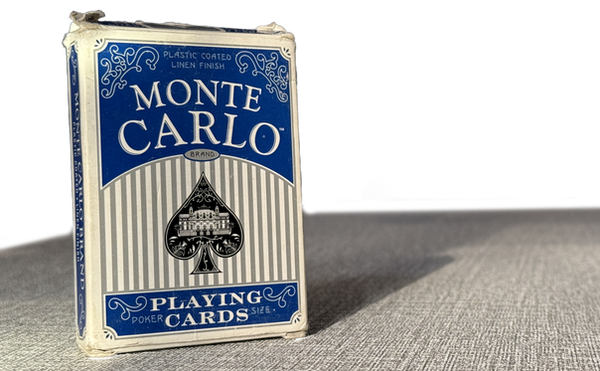
What You Need
2 Players
52-Card Deck (no Jokers)
Score pad + Pen/Pencil
Watch the step by step guide here!
Set Up
Choose a dealer and deal 10 cards to each player.
Place the rest of the deck face down to form a draw pile
Flip one card face up to start the discard pile.
The non-dealer goes first but can only take the face-up card on their initial turn. If they don't want that card they say pass giving the Dealer the chance to pick it up. If the Dealer also passes the non-Dealer can take from the face down draw deck.

Key Differences Between Rummy and Gin Rummy
Gameplay
On your turn, draw one card from the draw pile or the discard pile. Then discard one card.
You must end each turn with 10 cards in your hand.
You cannot discard the same card you just drew from the discard pile.
You do not lay down melds during play. You hold onto them until the end of the round.
Melds can be either sets (three or four cards of the same rank) or runs (three or more sequential cards of the same suit).


Card Ranking
Cards rank ace (low) through king (high).
Aces are worth 1 point
2 through 10 are face value
Jacks, queens, and kings are 10 points each

Ending the Round
A round can end in three ways:
-
Knocking: You knock when your deadwood totals 10 or fewer points. Discard your 11th card, knock the table, lay down your melds and reveal your remaining cards.
-
Gin: You go gin when all 10 cards in your hand form melds and you have zero deadwood. Discard your 11th card and reveal the perfect hand.
-
The draw pile is reduced to two cards and no one has knocked. The round ends in a draw and no points are awarded.

Scoring
If you knock, you earn the difference between your opponent’s deadwood and your own.
Your opponent may lay off their deadwood cards onto your melds to reduce the points you score.

In this example: The knocker has 7 points of deadwood. The opponent has 20 points of deadwood. 20-7= 13, so the Knocker gets 13 points, the opponent gets 0.

When a player knocks, scoring is based on deadwood. Deadwood is the total point value of all cards in a player’s hand that do not form part of a set or a run.
Laying Off
After the knocker lays down their melds and remaining cards, the opponent does the same.
Before scoring is finalized, the opponent is allowed to reduce their deadwood by laying off cards onto the knocker’s melds.
Laying off means adding cards to the ends of the knocker’s existing sets or runs where legally possible. Any cards laid off are no longer counted as deadwood.
Once laying off is complete, the knocker scores the difference between the opponent’s remaining deadwood and their own deadwood.
Example:The knocker has 7 points of deadwood. The opponent has 20 points of deadwood at first. The opponent is able to lay off a queen and a jack onto the knocker’s heart run, reducing their deadwood to 10. The knocker scores 3 points, which is 10 minus 7.
Going Gin
If you have no deadwood at all, meaning all 10 of your cards are in valid melds, you do not knock, instead you go "Gin."
You still discard one card to end your turn, but your hand must be completely clean of unmatched cards.
Going gin scores extra 25 points and prevents your opponent from laying off any cards.

Whoops, You Got Undercut
An undercut occurs when the knocker ends the round with more deadwood points than their opponent, after the opponent lays off their unmatched cards onto the knocker’s melds. It doesn’t matter if you were ahead before the layoff. After the math settles, if you’re behind, you lose the round.
What Do They Get?
A 25-point undercut bonus
The difference in deadwood between you and them
Bragging rights for at least one hand
What Do You Get?
Nothing

Example:You knock with 9 points of deadwood. Your opponent has 13 points, at first. But they lay off two cards onto your melds and reduce their total to 7. Now you have 9, they have 7.They undercut you.They score 2 points for the deadwood difference and 25 points for the undercut.You score 0.
How to Avoid It:
Don’t knock unless you’re reasonably sure your deadwood is lower
Watch what your opponent picks up, they might be building toward a perfect layoffIf in doubt, aim for Gin instead. That way, they can’t lay off at all

Variations
Bonus Options (House Rules):
Game bonus: 100 points for the first player to reach 100
Box bonus: 20 points for each hand won
Line bonus: 50 points for winning the game by a margin of 50 or more
Big gin: 25-point bonus if you form 11card melds and discard nothing.
Oklahoma Gin:The first face-up card determines the maximum deadwood allowed for knocking.
For example, if it’s a five, you can only knock with five or fewer deadwood points. If it’s a spade, all points for the round are doubled.